
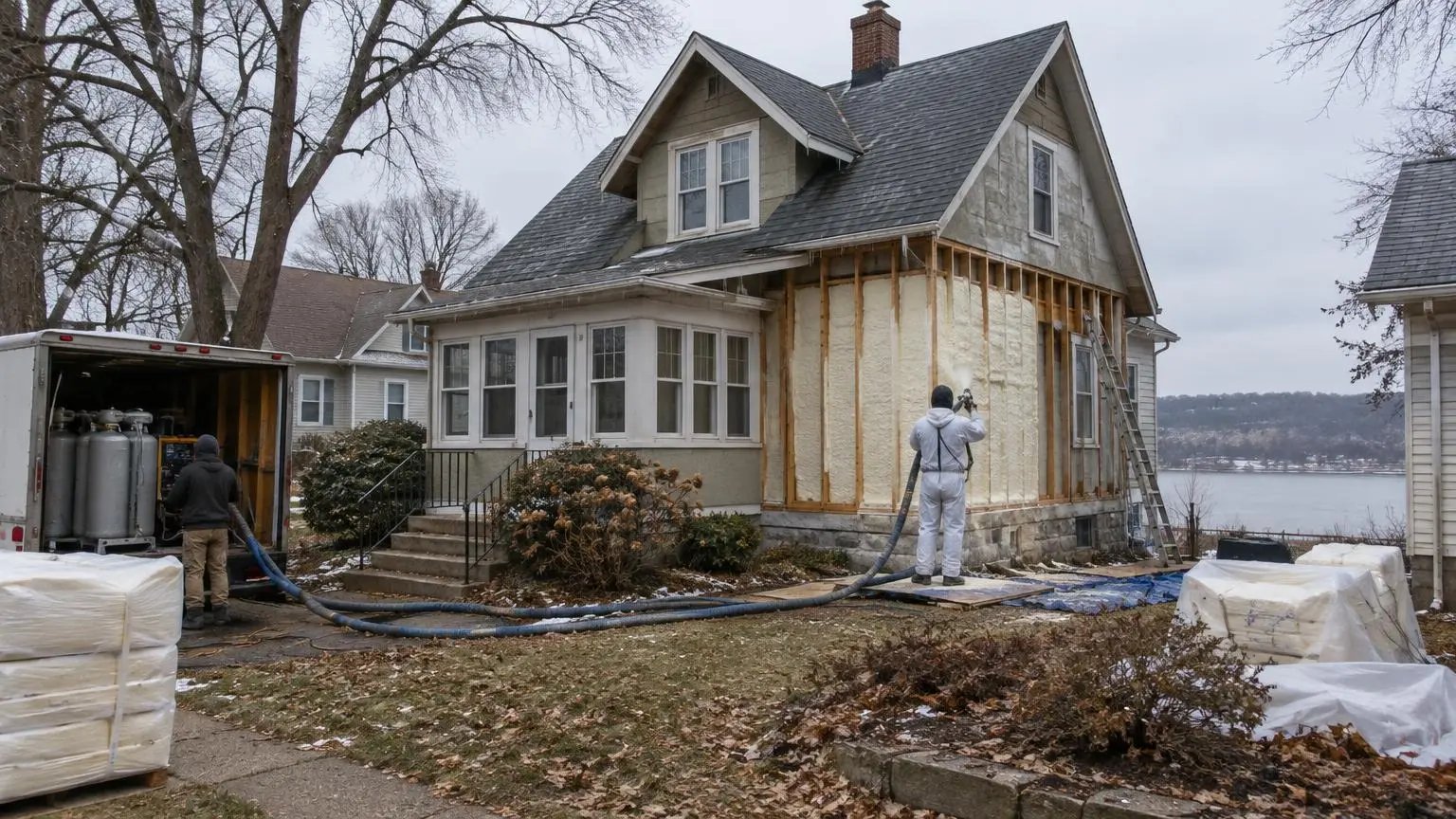
Capital city, century-old houses
Spray Foam Insulation in St. Paul, MN
Four in ten St. Paul homes were built before 1940. Most of our work here is making those houses hold heat.
- Free on-site estimates
- Written quote with material, depth and R-value for each area
- Air sealing done before any insulation covers it
Old Houses, Cold Winters, Real Fixes
Spray foam insulation in St. Paul is mostly a story about old houses. Census survey estimates for 2019 to 2023, as compiled by Point2Homes, show that 41.6% of the city's housing was built in 1939 or earlier and the median home dates to 1952. Houses from that era, such as foursquares, bungalows and story-and-a-half homes, were typically built with plaster walls and attics that were never air sealed.
What we find in those houses
The pattern repeats from street to street. Walls with nothing in the stud bays. A few inches of old loose fill in the attic, sometimes vermiculite. Kneewall attics where open floor joists run straight from the cold side into the heated house. Rim joists stuffed with dusty batts, or nothing at all. Each of those is a leak path, and together they explain why upstairs bedrooms are cold, why ice dams form along the eaves, and why heating bills stay high after a new furnace.
The climate behind it
The city was incorporated in 1854 and has been Minnesota's capital since territorial days, and it has always had hard winters. At the St. Paul Downtown Airport the 1991 to 2020 normal January high is 23.9 F and the record low is -41 F. The Twin Cities metro has the coldest average annual temperature of any major metro in the continental U.S. That is a long season of pressure on every gap in a house.
How we approach a St. Paul job
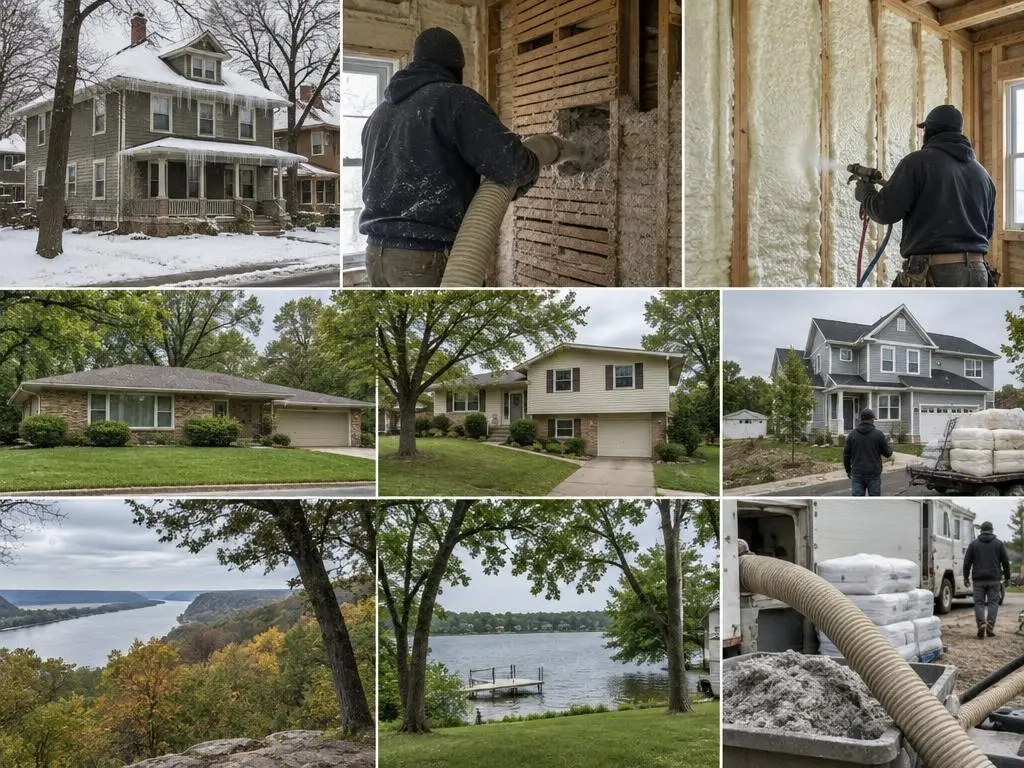
We start in the attic and the basement, where the biggest leaks are. Foam goes where loose fill cannot seal: the rim joist, kneewalls, sloped ceilings and the joist bays under kneewalls. Open attic floors get sealed and then blown to depth. Closed plaster walls get dense-pack fill through small holes, after we check for knob-and-tube wiring. If you plan to use a utility rebate, we line up the blower door testing with the work.
Budgeting for an older St. Paul house
On an old house, the order of work matters as much as the price. We usually suggest the attic and kneewalls first, since warm air escaping at the top drives both heat loss and ice dams. The rim joist comes next because it is cheap to reach. Walls come last unless rooms are noticeably cold, because filling a whole house of plaster walls is the largest line on most quotes. HomeGuide puts blown-in exterior walls at $1,900 to $7,800 nationally; your number depends on how many bays, stories and siding types we are working around.
Call (651) 661-2833 or ask for a written quote. Get a free estimate
What to Know in St. Paul
- Housing age. 41.6% of St. Paul homes were built in 1939 or earlier, and the median construction year is 1952 (ACS 2019-2023 5-year estimates via Point2Homes).
- Winter cold. St. Paul Downtown Airport normals for 1991-2020 show a January mean high of 23.9 F; the record low there is -41 F (Wikipedia climate table).
- Energy code zone. Ramsey County is in Climate Zone 6 of Minnesota's energy code, which lists R-49 ceilings and R-15/19 basement walls in the efficientwindows.org code summary.
- Frost depth. Minnesota Rule 1303.1600 places Ramsey County in frost Zone II, with a 3.5-foot minimum footing depth.
- Energy audits. Home Energy Squad visits, run for Xcel Energy and CenterPoint Energy, are scheduled through the Center for Energy and Environment for Ramsey County residents.
St. Paul Questions
Can you insulate the walls of a 1920s St. Paul house?
Usually. Closed plaster walls are filled with dense-pack cellulose or fiberglass through small holes, then patched. We check for knob-and-tube wiring first, since live knob-and-tube should not be buried in insulation.
What causes ice dams on my St. Paul house?
Most come from warm air leaking into the attic around chimneys, light fixtures and kneewalls, which melts snow on the roof. Sealing those leaks matters more than just adding insulation.
Do I need a permit for insulation in St. Paul?
That depends on the scope. Insulation tied to a remodel or addition is usually part of that permit. Ask the city's permit office about your project, and we will work within whatever applies.
Should I get an energy audit first?
It can help. A Home Energy Squad visit includes a blower door test for older homes, and that number is useful if you plan to apply for a rebate.
Do you work on duplexes and triplexes?
Yes. Many St. Paul rentals and owner-occupied duplexes share an attic and basement, which often makes sealing and insulating the whole building efficient in one visit.
Free Estimates in St. Paul, MN
Free on-site estimates anywhere in St. Paul.
Spray Foam Insulation Near St. Paul
- Spray Foam Insulation in Maplewood, MN
- Spray Foam Insulation in Roseville, MN
- Spray Foam Insulation in West St. Paul, MN
- Spray Foam Insulation in South St. Paul, MN
- Spray Foam Insulation in Inver Grove Heights, MN
- Spray Foam Insulation in Woodbury, MN
- Spray Foam Insulation in Oakdale, MN
- Spray Foam Insulation in North St. Paul, MN
- Spray Foam Insulation in White Bear Lake, MN
- Spray Foam Insulation in Shoreview, MN
- Spray Foam Insulation in Mendota Heights, MN
- Spray Foam Insulation in Eagan, MN
- Spray Foam Insulation in Cottage Grove, MN
- Spray Foam Insulation in Stillwater, MN
- Spray Foam Insulation in Vadnais Heights, MN
- Spray Foam Insulation in New Brighton, MN
- Spray Foam Insulation in Falcon Heights, MN
- Spray Foam Insulation in Little Canada, MN
- Spray Foam Insulation in Lake Elmo, MN
- Spray Foam Insulation in Mahtomedi, MN
- Spray Foam Insulation in Arden Hills, MN